Application and use conditions
Garment type, body zone, movement, care, destination and target behavior are recorded before a material is shortlisted.
About Lycra
Lycra is presented here as a specification-led material partner for elastic fibers, yarns and stretch fabrics. Our working principle is direct: performance language must stay connected to the material, construction, method, specimen and conditions that support it.
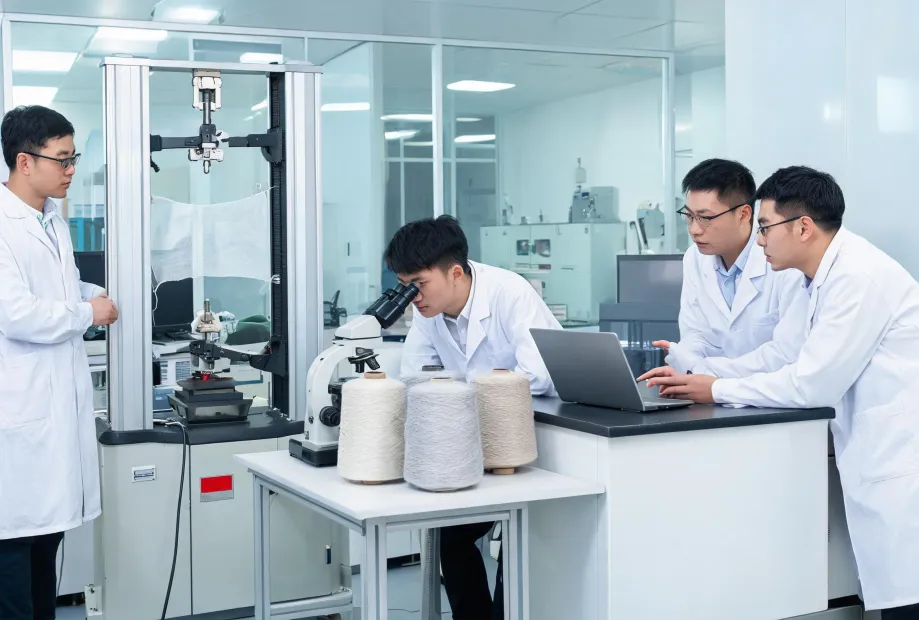
How work progresses
This sequence describes an engagement method, not a historical claim. It keeps commercial decisions from outrunning technical evidence.
Garment type, body zone, movement, care, destination and target behavior are recorded before a material is shortlisted.
Material identity, linear density, blend, placement, construction, GSM, width, color, finish and stretch direction create the comparison basis.
Conditioning, extension, cycles, recovery interval, directions and units are fixed so results can be interpreted within scope.
Test output, deviations, sample identity, lot, quantity, MOQ, lead time, packaging and destination remain attached to the decision.
Three working values
We state what a document or result covers and avoid extending it to another composition, finish, color, construction or production lot without review.
Stretch, growth and recovery values are interpreted only with a named procedure, direction, conditioning state, extension and timing.
Trials move forward through explicit gates. Open technical or commercial items remain visible instead of becoming silent assumptions.

Translates fiber form, denier, finish, blend and placement into a comparable requirement.

Connects specimen preparation, conditioning, stretch direction, cycles and recovery interval to the question being answered.

Keeps approved construction, lot evidence, quantity, timing, packaging and destination aligned through handoff.
A better first conversation
Describe the garment, target hand and support, movement, care route, construction and acceptance method. This creates a useful path to material review and trial planning.